Top Temples in Lampang Must-Visit Sacred Sites for Spiritual Blessings

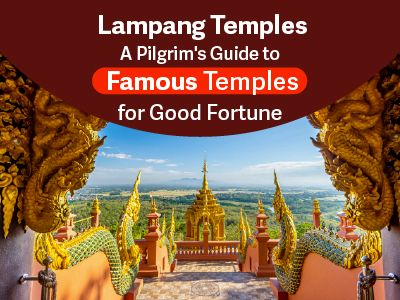
Calling all spiritual seekers to explore Lampang’s stunning temples: uncover the latest sacred hotspots where you can request blessings to boost your luck in career, finances, love, and fortune, along with tips on how to pray and the mystical stories you need to know. Lampang is not only charming for its slow-paced lifestyle and iconic horse-drawn carriages, but also a hidden treasure trove of faith waiting to be discovered by devotees. The temples here feature ancient structures that seamlessly blend Lanna civilization with Burmese artistic influences, giving each one its own unique character and spiritual power. Visiting Lampang is more than sightseeing the old town; it’s a journey to recharge your spirit and invite auspiciousness into every aspect of your life. This article is your complete guide, diving deep into Lampang’s must-visit and renowned temples celebrated for granting various blessings by compiling local legends, firsthand accounts, and social media trends to ensure your spiritual trip in Lampang brings you the fortune you desire. Get ready to enhance your life’s auspicious energy in Lampang, a city that stands timeless yet overflows with sacred power! The allure of Lampang that continuously draws spiritual temple-goers comes from the perfect blend of its long history, revered religious sites, and one-of-a-kind spiritual experiences. Many temples here are centuries old, with some tracing back to the era of Queen Cham Thewi. These ancient roots testify to a faith handed down through generations. Moreover, traditional worship practices such as making specific offerings or chanting special sutras continue to be observed, further reinforcing belief in the temples’ sanctity. Lampang also boasts Thailand’s own “unseen” wonders, like the inverted shadow of the stupa at Wat Phra That Lampang Luang and the giant Dainbutsu statue at Wat Phra That Doi Chom, creating awe-inspiring sights unique to this region. Altogether, these factors make Lampang not just a city of historic temples, but a vibrant sacred land that satisfies spiritual seekers seeking genuine faith and truly unique pilgrimage experiences.
Drop a pin to boost your career luck and ensure steady solid advancement at Lampang famous temple.
For those seeking career advancement whether you’re aiming for a promotion or longing for stability in your professional life Lampang is home to several sacred temples renowned specifically for granting blessings in these areas. Let’s explore which sites spiritual seekers shouldn’t miss when visiting Lampang’s holy places.
Wat Phra That Lampang Luang The Prestige of the City’s Twin Relics Supporting Your Career

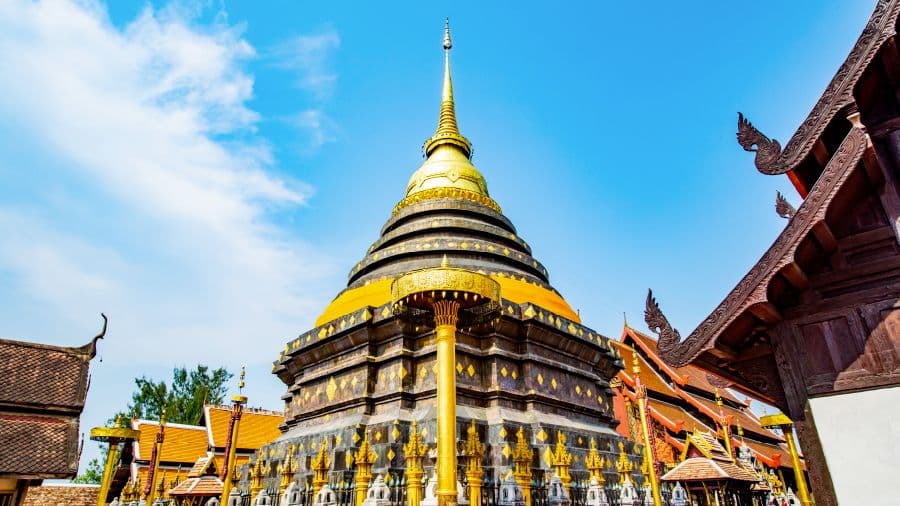
Wat Phra That Lampang Luang is not only an ancient temple that has long stood as a symbol of Lampang and the birth-year shrine for those born in the Year of the Ox, but it is also one of the foremost sacred sites where people come to pray for success in their careers. Its extensive history legend holds that Queen Cham Thewi herself visited repeatedly to pay homage and oversee restorations and the fact that it houses the Buddha’s sacred relics, imbues this Lampang temple with a powerful merit believed to propel one’s destiny toward flourishing prosperity. In particular, paying respects to Phra Kaew Don Tao (the Emerald Buddha) enshrined here enhances the temple’s spiritual potency when petitioning for career advancement. Many attest that prayers offered at Wat Phra That Lampang Luang are most effective for professional achievements, business success, new beginnings, and academic endeavors. The ancient energy of the temple and its sacred icons is thought to smooth one’s path, foster progress, and fulfill one’s aspirations.
How to Pray Although there is no specific chant solely for career requests, focusing one’s mind in devout aspiration before the main stupa and Phra Kaew Don Tao clearly stating your desired career outcome is essential. The general chant for honoring Wat Phra That Lampang Luang is: “Yapātu bhūta ātulānubhāvācīraṃ paṭiṭṭhālamapa kappapure devanakuttā uttārābhitaṃ yānāmami hantāṃ varāciṇadhātuṃ.” (Begin by reciting “Namo” three times.)
Sacred Features and Points of Interest Beyond the primary stupa and Phra Kaew Don Tao, the temple is famed for its “inverted stupa shadow” phenomenon a breathtaking play of light and shadow. Though not directly tied to career blessings, this marvel amplifies the overall sanctity of the site, making every prayer there feel charged with intensified spiritual energy. The power of Wat Phra That Lampang Luang to enhance career fortunes arises from its status as a principal city stupa, its role as keeper of the Emerald Buddha’s relic, and the many success stories of pilgrims making it one of the first must-visit destinations for anyone seeking professional advancement.
Trailaks Cemetery Pay Homage to Luang Pho Kasem Khemko, the Venerable Monk, to Boost Your Work Power
Trailaks Cemetery, a meditation center and the final resting place of the preserved remains of Luang Pho Kasem Khemko a highly revered ariya monk cherished by Lampang’s residents and Buddhist devotees nationwide is another key pilgrimage site for those seeking to fortify their career fortunes. Luang Pho Kasem Khemko’s reputation for granting “smooth, obstacle-free success in work” draws countless visitors. This assurance has become a hallmark: those facing professional challenges or striving for a trouble-free career believe that praying to him will empower them to overcome obstacles and achieve their goals.How to Pray
- Invocation to Luang Pho Kasem Khemko Light one incense stick, bow once at chest level, and recite: “Okkhāsa okkhāsa ājariyo menaṭho pante hotu; āyasmaa Khemko bhikkhu menaṭho pante hotu; ājariyaṃ vandāmihaṃ.”
- Mantra for Fortune, Compassion, and Prosperity (applicable to career) After invoking Phra Siwali and Luang Pho Kasem, begin with three recitations of “Namo,” then chant: “Sivali mahātheraṃ vandāmihaṃ” (three times), “Mahāsiwali thero mahālāpo hoti,” “Mahāsiwali thero lābhaṃ me tethe.” Though centered on wealth and trade, this mantra may also be employed to pray for professional advancement.
- Invitation of Sacred Objects Recite: “May your merit protect and uphold me, support my destiny and career…”
Devotion to Luang Pho Kasem Khemko stems from his exemplary monastic discipline and detachment, which devotees believe have crystallized into a potent spiritual force capable of granting remarkable blessings. The clear invocation protocol makes the pilgrimage to Trailaks Cemetery a journey imbued with hope and encouragement.
Wat Sri Chum The Power of the Burmese Temple Strengthening Career Stability

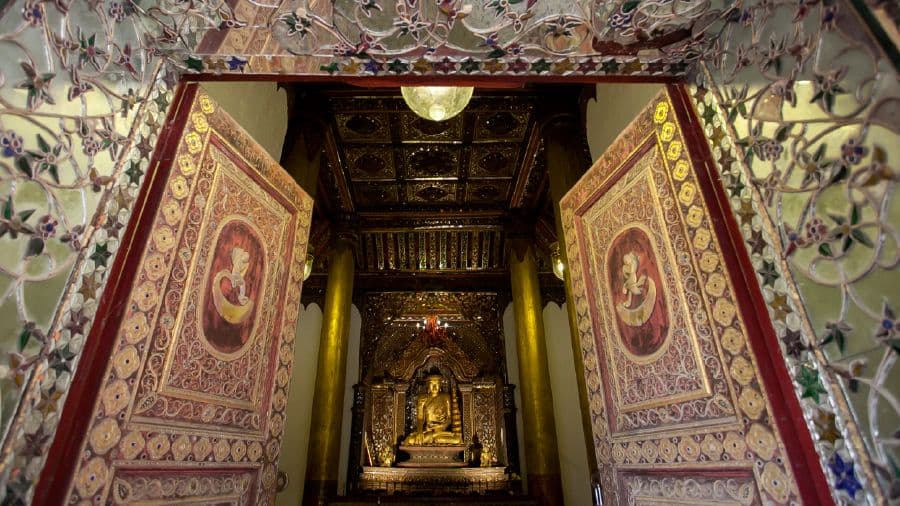
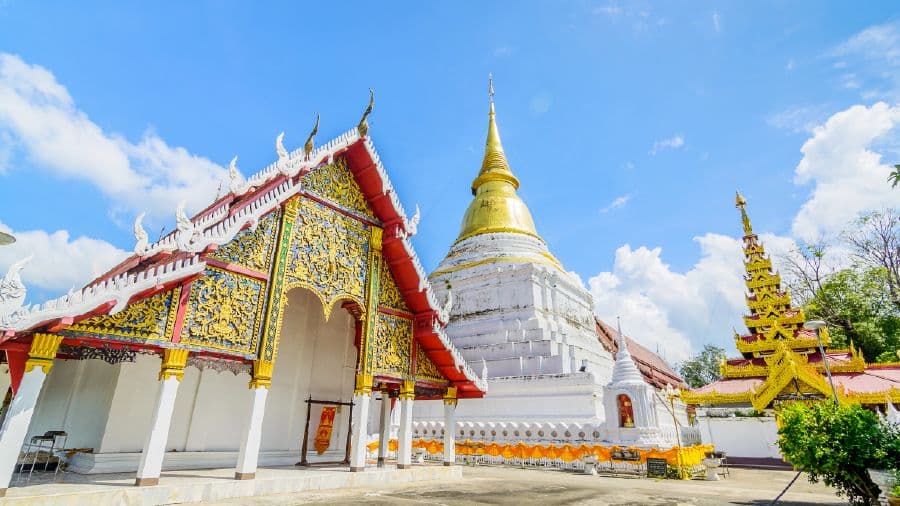
Wat Sri Chum is considered the largest Burmese-style temple in Thailand, renowned for its stunning fusion of Burmese and Lanna architecture. Founded by a wealthy Burmese timber merchant during the reign of King Rama V, this history contributes to devotees’ belief in its power to grant success and stability in life. For spiritual seekers desiring security and achievement especially in their careers Wat Sri Chum is not to be overlooked. It is often said to be “ideal for requesting blessings of stability and success.” The temple’s grandeur, funded by prosperous merchants, inspires confidence in the power of prosperity.
Sacred Elements and Points of Interest Inside the compound stand the “Thousand-Year Teak Buddha” and several other Burmese-style Buddha images. Although the main ordination hall was rebuilt after a fire, it retains the exquisite wood carvings characteristic of Burmese artistry. In addition, Wat Sri Chum is famous for its small “Cupid” carvings Western-style cherubs displayed above the stairway arch and at various points within the grounds. This culturally diverse art adds another layer of appeal for visitors.
How to Pray While there is no specific chant prescribed for career blessings at Wat Sri Chum, performing general merit-making offerings and setting your intention focusing on stability and success in your profession before the sacred images (especially the principal Buddha and the Thousand-Year Teak Buddha) is the recommended practice. Faith in the temple’s energy built by merchants who achieved great success can strengthen your prayer for career advancement. The association of Wat Sri Chum with career blessings particularly “stability and success” likely stems from its historical ties to wealthy Burmese timber traders and the grand architecture reflecting their achievements. Being the largest Burmese-style temple in Thailand further enhances its perceived spiritual power among devotees.
Wat Sri Rong Mueang Pray to the Prompt Spirit for Smooth and Fulfilling Work

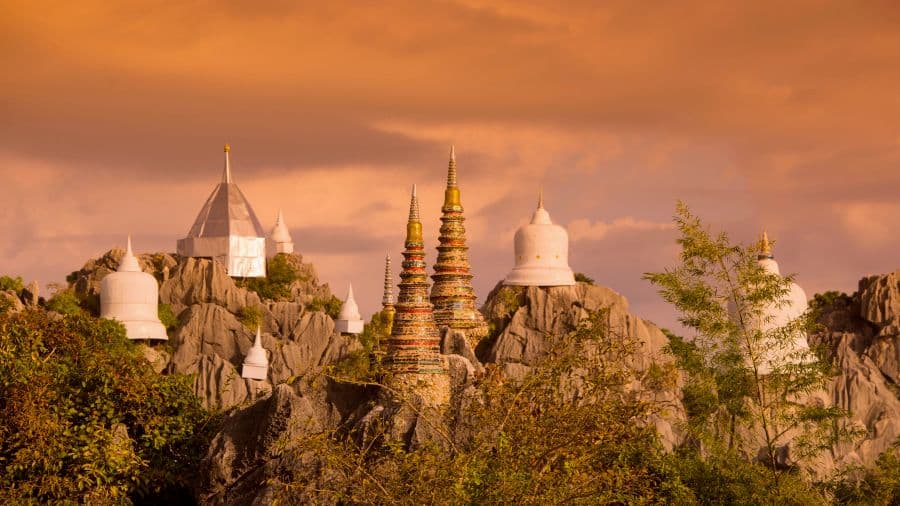
Wat Chalerm Phrakiat Phra Chom Klao Rachanusorn (commonly known as Wat Phra Bat Pu Pha Daeng) is one of Lampang’s “Unseen Thailand” attractions. The sight of its white chedis both small and large perched atop a high mountain, appearing to float among the mist, leaves an unforgettable impression and inspires deep faith in every visitor. Although its architectural beauty and panoramic views are the main draw, this temple is also a popular pilgrimage site for those seeking “financial fortune.” The marvel of constructing chedis on a steep mountaintop evokes a sense of sacredness and closeness to the heavens. Locals believe each chedi contains revered sacred objects, and offering prayers amid these stunning vistas is said to open the channels for wealth to flow.
How to Pray
There is no specific chant for wealth at this temple, but inside you’ll find a Prayer Pavilion where monks recite blessings on the eighth waning day of each lunar month. Multiple Buddha images stand ready for veneration. Setting your intention firmly on financial blessings amid the sacred atmosphere and breathtaking scenery is believed to intensify your petition. The journey itself beginning with the temple’s shuttle service and ending with a climb up the stairway serves as a pilgrimage that builds merit and gives your prayers additional weight. The temple’s “Unseen Thailand” status, combined with the belief that its mountaintop chedis enshrine sacred relics, makes Wat Chalerm Phrakiat Phra Chom Klao Rachanusorn a must-visit for wealth blessings in Lampang. The effort required to reach it further enriches the spiritual significance of the visit.
Trailaks Cemetery Pay Homage to Lord Vessavana to Ward Off Obstacles and Attract Wealth
Trailaks Cemetery is not only the meditation center and final resting place of Luang Pho Kasem Khemko a highly revered monk beloved by Lampang’s residents and Buddhists nationwide but also home to a large statue of Lord Vessavana (Kubera). As one of the Four Heavenly Kings, Lord Vessavana rules the northern quarter and presides over yakshas and spirits. He is honored as the deity of wealth and abundance. Paying homage to him here is considered an excellent opportunity to enhance financial fortune, attract good luck, and dispel obstacles alongside seeking blessings from Luang Pho Kasem.
How to Pray and Offerings
(General principles for worshipping Lord Vessavana)
- Light nine incense sticks and offer nine roses.
- Chant the full prayer for Lord Vessavana nine times for auspiciousness: “Itipi so bhagava yamma rajano Thao Wessuwan-no maranang sukhang ahang sukhato Namo Buddhaya Thao Wessuwan-no Chatumaharajika yakkha panthabhatbhurito Wessa Pusa Buddhang arahung Buddho Thao Wessuwan-no Namo Buddhaya”
- Some practitioners recommend placing your wallet or mobile phone beneath the deity’s hand during your prayer an adaptation from Lakshmi worship to focus the petition on financial blessings.
Welcome Wealth Let Financial Fortune Flow Abundantly at Lampang Sacred Temple
For those who wish for wealth, smoother finances, good fortune, or a thriving business, Lampang is home to several sacred temples renowned for granting these blessings. Ready your wallet, and let’s explore which temples you should visit to open the gates to prosperity.
Wat Jong Kham (Ngaw District) A Secret Trading-Luck Hotspot, Endorsed by the Affluent
Wat Jong Kham, a royal monastery in Ngaw District, may not be a familiar name to most tourists, but within Lampang’s spiritual circles especially among the wealthy it is known as “the temple few know, but the rich do.” This reputation has made Wat Jong Kham a compelling destination for those seeking to seriously enhance their financial and commercial fortunes. The temple features beautiful Tai Yai–Burmese architectural elements. What sets Wat Jong Kham apart is its special focus on blessings for “trade and commerce.” A TikTok user even shared that they were able to sell their car at a great price after praying here stories like this only reinforce belief in the temple’s power.
Offerings for Vowed Prayers To ensure your vow is fulfilled, it is believed you should offer “a fresh pig’s head or other fresh meat, fresh eggs, and live chicken.” The temple provides red flowers, incense, and candles for worshippers. The specificity and often high cost of these offerings reflects the belief that this sacred site wields great power, and petitioners are willing to “invest” to receive their desires.
Sacred Elements and History Inside the compound stands a replica of the Bodh Gaya stupa from India, as well as a large statue of Phra Sangkachai an arhat revered for bestowing wealth and abundance. The temple’s origins are tied to prosperity: it is said to have been founded by a wealthy Tai Yai merchant who held the logging concession in Lampang Province. The temple’s reputation for financial and commercial blessings is deeply rooted in firsthand accounts particularly among the “affluent.” The elaborate offerings and the community’s confidence in the temple’s spiritual power testify to its ability to truly grant financial success.
Wat Na Ban Rai (Thoen District) The Power of the Phra Kaew Pong Kham to Attract Wealth and Enhance Prestige
Wat Na Ban Rai in Thoen District is famous for its “Phra Kaew Pong Kham,” a large Buddha image carved from local quartz known as “pong kham.” This crystal is not ordinary stone but is believed to possess mystical natural powers that protect against harm and bestow auspicious blessings. The power of pong kham covers many areas especially “enhancing fortune, rank, destiny, charisma, popularity, and protection.” Different quartz varieties are thought to confer distinct benefits: clear “kan hek” quartz for wealth and rank, “sand quartz” for financial luck, and honey-colored “vitthun” quartz also prized for prosperity. In the Northern dialect, “kham” implies invulnerability, further underscoring the crystal’s protective power.
How to Worship and Beliefs
- Devotees believe that requests made to the Phra Kaew Pong Kham at Wat Na Ban Rai are almost always fulfilled.
- Worship rituals include specific ceremonies and chants such as reciting “Samamimithimami” for sand quartz to invoke wealth rinsing the image with flowing water to cleanse negativity, and performing a “major worship” on the full-moon day, offering clean water, flowers, incense, perfume, and, for “inside-to-inside” crystals, betel quid.
The area around Wat Na Ban Rai is also a hub for cutting and selling pong kham jewelry, reflecting the local community’s devotion to this sacred gem. The supernatural power of Wat Na Ban Rai in matters of finance and luck is tightly bound to traditional beliefs in the pong kham’s capabilities. Enshrining a large quartz image amplifies the temple’s sanctity, and the specialized worship ceremonies help devotees feel deeply connected to the crystal’s energy.
Wat Chalerm Phrakiat (Wat Phra Bat Pu Pha Daeng) Pray to the Floating Chedi to Open the Path to Fortune

Wat Chalerm Phrakiat Phra Chom Klao Rachanusorn (commonly known as Wat Phra Bat Pu Pha Daeng) is one of Lampang’s “Unseen Thailand” attractions. The sight of its white chedis both small and large perched atop a high mountain, appearing to float among the mist, leaves an unforgettable impression and inspires deep faith in every visitor. Although its architectural beauty and panoramic views are the main draw, this temple is also a popular pilgrimage site for those seeking “financial fortune.” The marvel of constructing chedis on a steep mountaintop evokes a sense of sacredness and closeness to the heavens. Locals believe each chedi contains revered sacred objects, and offering prayers amid these stunning vistas is said to open the channels for wealth to flow.
How to Pray
There is no specific chant for wealth at this temple, but inside you’ll find a Prayer Pavilion where monks recite blessings on the eighth waning day of each lunar month. Multiple Buddha images stand ready for veneration. Setting your intention firmly on financial blessings amid the sacred atmosphere and breathtaking scenery is believed to intensify your petition. The journey itself beginning with the temple’s shuttle service and ending with a climb up the stairway serves as a pilgrimage that builds merit and gives your prayers additional weight. The temple’s “Unseen Thailand” status, combined with the belief that its mountaintop chedis enshrine sacred relics, makes Wat Chalerm Phrakiat Phra Chom Klao Rachanusorn a must-visit for wealth blessings in Lampang. The effort required to reach it further enriches the spiritual significance of the visit.
Trailaks Cemetery Pay Homage to Lord Vessavana to Ward Off Obstacles and Attract Wealth
Trailaks Cemetery is not only the meditation center and final resting place of Luang Pho Kasem Khemko a highly revered monk beloved by Lampang’s residents and Buddhists nationwide but also home to a large statue of Lord Vessavana (Kubera). As one of the Four Heavenly Kings, Lord Vessavana rules the northern quarter and presides over yakshas and spirits. He is honored as the deity of wealth and abundance. Paying homage to him here is considered an excellent opportunity to enhance financial fortune, attract good luck, and dispel obstacles alongside seeking blessings from Luang Pho Kasem.
How to Pray and Offerings
(General principles for worshipping Lord Vessavana)
- Light nine incense sticks and offer nine roses.
- Chant the full prayer for Lord Vessavana nine times for auspiciousness: “Itipi so bhagava yamma rajano Thao Wessuwan-no maranang sukhang ahang sukhato Namo Buddhaya Thao Wessuwan-no Chatumaharajika yakkha panthabhatbhurito Wessa Pusa Buddhang arahung Buddho Thao Wessuwan-no Namo Buddhaya”
- Some practitioners recommend placing your wallet or mobile phone beneath the deity’s hand during your prayer an adaptation from Lakshmi worship to focus the petition on financial blessings.
Because Trailaks Cemetery enshrines both the preserved remains of Luang Pho Kasem Khemko and the statue of Lord Vessavana together, it serves as a “power center” where visitors can receive comprehensive blessings: merit and life guidance from the monk, and wealth and protection from Lord Vessavana. Together, they provide amplified auspiciousness in a single sacred destination when visiting Lampang.
Outstanding temples in Lampang for enhancing financial luck and fortune.
Make love sweet may your wishes for love be fulfilled in the Land of Lanna.
Matters of the heart are no less important! For spiritual seekers looking for a sweet and fulfilling love, those wanting to deepen an existing relationship, or singles hoping to meet their true soulmate, Lampang offers several sacred sites and temples famed for granting blessings of the heart. Ready your heart, and let’s explore which places can help your love life unfold as you desire.
Wat Phra That Doi Phra Chan Hang the Love Prayer Bell in a Dreamlike Realm

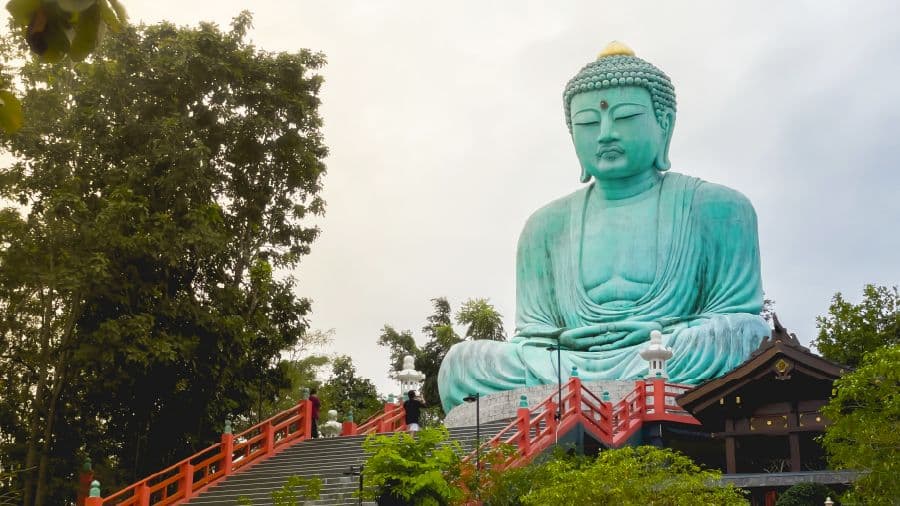
Wat Phra That Doi Prachan is not only renowned for its breathtaking mountaintop views and architecture that harmoniously blends Lanna heritage with Japanese charm, particularly the imposing Daibutsu statue, but it is also a favourite destination for spiritual seekers in Lampang wishing to pray for love. The temple’s dreamlike atmosphere, from the sea of mist at dawn during winter to beautifully crafted features such as the red torii gate, further enhances the romance and hopeful spirit of love prayers here.
Love Blessing Tips
- Hang a prayer bell: At Wat Phra That Doi Prachan there is a spot to “hang a love prayer bell.” It is believed that the clear sound of the bell carries prayers to the sacred powers and helps strengthen the chances of a fulfilling love life.
- Rose incense: It is recommended to use “rose-scented love incense” when praying here. As the rose is a universal symbol of love, burning rose incense is believed to enhance one’s charm and attract positive love into life.
- Phra Nang Jiraprapa Mahathevi: According to social media sources, Phra Nang Jiraprapa Mahathevi is revered for matters of the heart. When praying to her, offer six incense sticks, and if your wish is granted, pay a vow by offering fruit or boiled eggs. Although it is unclear whether her statue is directly enshrined at Wat Phra That Doi Prachan, the context of these accounts suggests a spiritual connection mentioned by devotees.
In addition to love blessings, the century-old white stupa and Phra Phuttha Sikhi Thotaphon Yan, the principal Buddha image in the viharn, are sacred objects worthy of veneration for overall good fortune. The popularity of Wat Phra That Doi Prachan among love seekers stems from its perfect blend of specialized spiritual rituals (hanging bells, using rose incense), a uniquely romantic and beautiful atmosphere influenced by Japanese aesthetics, and even associations with local legends or goddesses of love (such as Phra Nang Jiraprapa). These elements together create a complete and memorable love blessing experience.
Wat Phra Kaew Don Tesa Chadararam and Wat Si Chum Following in the Footsteps of "Cupid" the God of Love

It is both surprising and intriguing that Lanna–Burmese Buddhist temples in Lampang namely Wat Phra Kaew Don Tao Suchadaram and Wat Sri Chum feature carved wooden images of “Cupid,” the Western god of love. This has become a charming gimmick that modern spiritual seekers follow in hopes of receiving love blessings when they visit these Lampang temples.
- Wat Phra Kaew Don Tao Suchadaram: This ancient temple not only once housed the Phra Kaew Don Tao (Emerald Buddha), but also has a Cupid statue adorning the ceiling of its mondop. The TAT Lampang Office notes, “Wat Phra Kaew Don Tao features a Cupid carving believed to grant love to those who pray here.”
- Wat Sri Chum: Thailand’s largest Burmese-style temple also boasts small Cupid carvings above the archway leading to its vihara and at various spots throughout the grounds. It is said you can “pray for love at Wat Sri Chum” as well.
Origin of the Cupid Figures These Cupid carvings were crafted by Burmese artisans during the period of British artistic influence in the colonial era. They merged this Western motif with their traditional carving techniques. Although the symbol originates from Western culture, today’s spiritual seekers have reinterpreted these Cupid figures as emblems for requesting love blessings making for a fresh, fascinating pilgrimage experience in Lampang.
How to Pray There is no formal ritual specifically for these Cupid images, but the practice is simple: locate the carvings, focus your intention on love, and offer your heartfelt prayer with faith. The magic lies in discovering something unexpected that nonetheless powerfully connects with your longing for romance. The presence of “Cupid” at Wat Phra Kaew Don Tao Suchadaram and Wat Sri Chum exemplifies an extraordinary cultural fusion where a Western symbol introduced by Burmese craftsmen under British influence has been embraced and adapted into local spiritual practices to invoke love blessings. It offers a uniquely novel spiritual experience for Lampang’s temple pilgrims.
Sanctuary of Bestowing Blessings Pay Homage to the Trimurti and Goddess Lakshmi, Deities of Love and Fulfillment

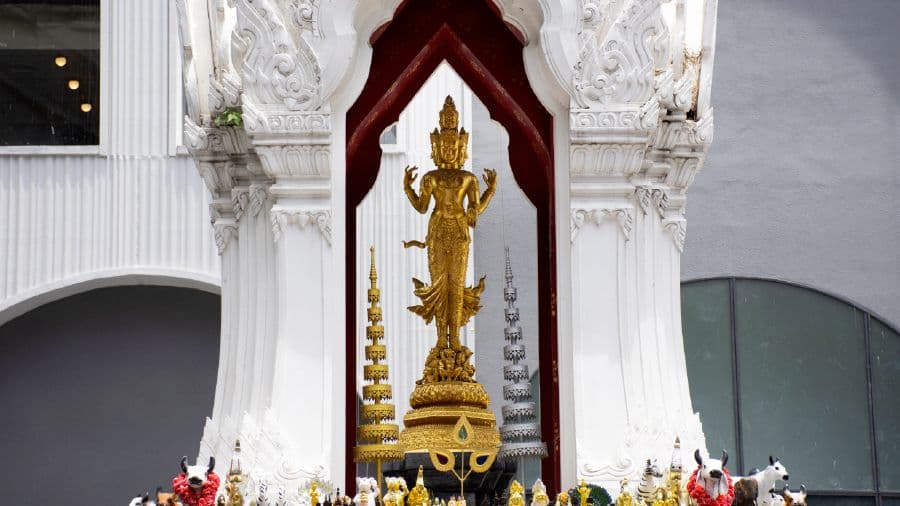
The Sanctuary of Bestowing Blessings in Lampang is another key destination for those seeking love blessings, especially from Hindu deities widely revered among Thai spiritual seekers: the Trimurti and Goddess Lakshmi.
- Trimurti: The great deity combining Brahma, Vishnu, and Shiva into one, known for granting blessings of love and fulfillment in relationships. Paying homage to the Trimurti is very popular among those wishing to find their soulmate or to stabilize and deepen an existing bond.
- Goddess Lakshmi: The goddess of beauty, wealth, fortune and above all, love and abundance. Lakshmi is especially beloved by women seeking successful romance or hoping to attract the ideal partner. The social media catchphrase “Ai Khai Phra Mae Lakshmi about him/her” reflects the strong faith in her power over matters of the heart.
How to Pray and Offerings
- Order of worship: It is generally recommended to pay respects to Ganesha first (if his image is present), then to Goddess Lakshmi.
- Offerings for Lakshmi: While wearing pink or red attire is not mandatory, offering pink or red lotus flowers and roses is essential. Avoid meat. Auspicious fruits (e.g., five red apples), fresh milk, and sweets are also popular offerings.
- Set your intention: Pray with sincerity and focus, clearly stating your heartfelt wish.
Thus, the Sanctuary of Bestowing Blessings in Lampang serves as a hub for Hindu love deities embraced by Thai spiritual seekers, offering a familiar and widely accepted path to petition for love adding to Lampang’s diverse options beyond local customs or novel symbols.
Chao Mae Tub Tim Shrine Pray for a Good Soulmate and a Smooth Love Life
The Chao Mae Tub Tim Shrine in Lampang is another sacred site recommended by the TAT Lampang Office for those seeking love blessings. It is believed that praying to Chao Mae Tub Tim here helps visitors meet a “good soulmate” and enjoy a smooth, fulfilling romance. Although detailed information about this specific shrine is limited, Chao Mae Tub Tim (also known as Juay Buay Nia in Hainanese Chinese) is a revered sea goddess among Hainanese communities worldwide, including Thailand. Her legends often involve protecting sea travelers and granting aid to those in distress, making her sanctity widely celebrated.
How to Pray and Offerings
- Chant the invocation: “Namo Tassa Bhagavato Arahato Samma Sambuddhassa” three times, then “Imam saccavacang adhisthami iti iviyan animanima nimama metta thanang labang sapphakunang akangcha mohmahi” five times.
- Offerings: Common offerings include a pair of red candles, flower garlands, paper offerings, auspicious fruits (e.g., nine oranges or nine apples), Chinese pear sweet cakes, or steamed sponge cakes.
The Chao Mae Tub Tim Shrine in Lampang thus provides another option for spiritual seekers praying for love especially to find a good soulmate by invoking a Chinese deity whose rich, long-standing legends enhance the shrine’s mystique and reverence.
Enhancing general auspiciousness and other noteworthy temples that spiritual enthusiasts shouldn’t overlook.
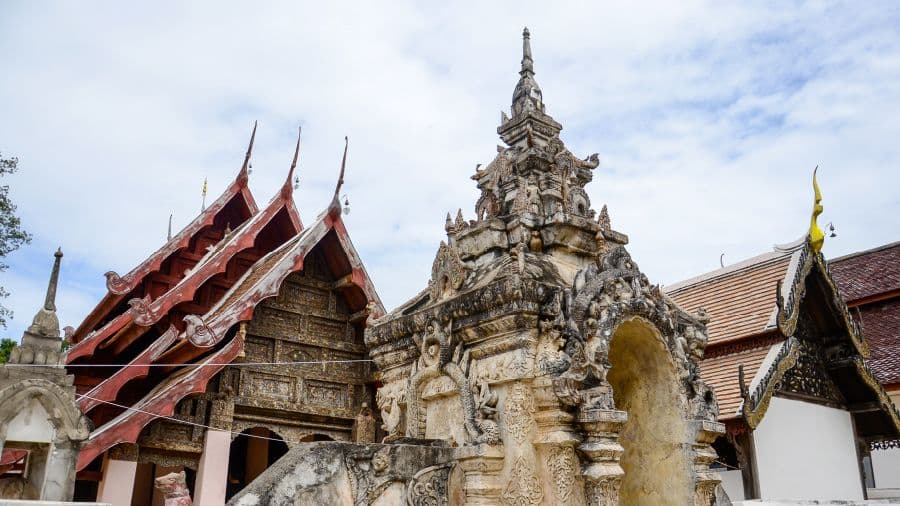
Beyond the Lampang temples renowned for specialized blessings, Lampang also offers many other temples rich in historical significance, artistry, and sanctity ideal for paying respects to invite overall auspiciousness, accumulating merit, admiring Lanna architectural beauty, or uncovering fascinating hidden beliefs.
Wat Lai Hin Luang (Wat Sela Rattanapappataram) Admire Lanna Art and Accumulate Merit

Wat Lhai Hin Luang, also known as Wat Sela Rattanapappataram, is an ancient temple celebrated for its pure Lanna architecture, which is rare to find. Its layout was designed to mirror the cosmic universe according to the Lanna Traiphum cosmology, making this Lampang temple not only a place of worship but also a living museum of ancient culture and belief. While Wat Lhai Hin Luang may not be as famous for specialized blessing rituals as some other Lampang “spiritual” temples, it is ideal for experiencing tranquility, making merit, and admiring priceless art. The temple safeguards numerous ancient manuscripts and relics, underscoring its historical role as a center of Buddhist learning. The accumulated power of knowledge and wisdom here is something every visitor can feel.
Highlights and Sacred Features
- The open main hall (viharn), enshrining the principal Buddha image, with gold-line mural paintings adorning the wooden roof panels
- The ancient stupa, whose base is adorned with relief sculptures of the 12 zodiac animals
- The castle-shaped Khong gateway, decorated with intricate stucco carvings by Lampang craftsmen
- The legend of the coconut shell: the story of Phra Mahapakasampanyo (Kruba Silatham Chao) receiving half a coconut shell from the Prince of Chiang Tung, later matched perfectly with the other half at Wat Lhai Hin, sparking devotion and prompting a major temple restoration; this tale adds to the temple’s allure and spiritual potency
Visiting Wat Lhai Hin Luang is thus a pilgrimage focused on absorbing beauty, serenity, and historical narrative an experience that uplifts the spirit and brings merit in a way that goes beyond specific prayer requests.
Wat Pong Yang Kok Retracing the Legend of Queen Cham Thewi – Prayers for Success
Wat Pong Yang Kok is a small Lampang temple with a history spanning over a thousand years. Its origins are tied to Queen Cham Thewi, the first ruler of the Hariphunchai Kingdom. This historic connection imbues the temple with sacred power and deep veneration. The Cham Thewi Hall is the heart of Wat Pong Yang Kok: a small wooden hall crowned with a three-tiered roof in the ancient Lanna style of the Hariphunchai era. It received the Outstanding Architectural Conservation Award from the Association of Siamese Architects. Legend holds that here the queen’s royal elephant knelt and raised its trunk in homage, inspiring her to build a castle-shaped mandapa (Khong Phra Chao) over a termite mound that emitted radiant light. She named it “Wat Pong Chang Nop” (Temple of the Kneeling Elephant), a name that over time evolved into “Wat Pong Yang Kok.”
Sacred Objects and Points of Interest
- The Khong Phra Chao: a castle-shaped mandapa within the rear chamber of the viharn, housing the principal Buddha image in the Mara Vichaya posture
- The sword scar on the viharn wall: a historical mark believed to have been made during the battle between Nan Thip Chang (the hero who liberated Lampang from Burmese rule) and the Burmese commander Thao Maha Yot; this scar symbolizes victory and courage
- The lai kram mural paintings: exquisite ancient murals and gold-line designs on a red lacquer background within the viharn
Although no specific blessing ritual is prescribed, the association with the revered Queen Cham Thewi and the heroic Nan Thip Chang leads many to believe that paying respects here will enhance success, help overcome obstacles, and secure protection. The spiritual power of these historic figures is seen as a source of sacred energy from which visitors can draw blessings.
Wat Phra Chedi Sao Lang Counting Chedis to Accumulate Merit – Prayers to the Prompt Buddha

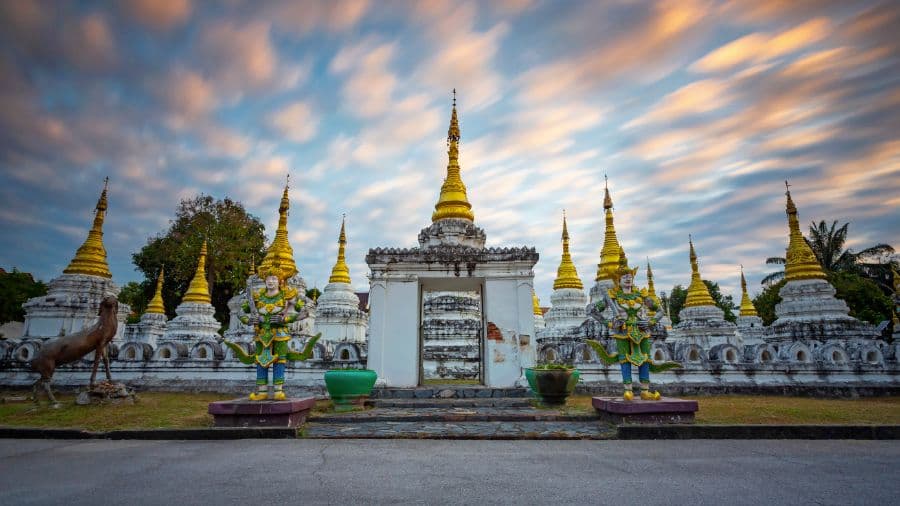
Wat Phra Chedi Sao Lang is another Lampang temple with a distinctive identity and fascinating features. The name “Sao Lang” comes from the Northern Thai dialect, where “sao” means twenty and “lang” refers to the chedis (stupas). Combined, it means “Temple of Twenty Chedis.” It is believed this temple was built over a thousand years ago, as amulets from the Hariphunchai period were unearthed on the grounds. For Lampang spiritual travelers, Wat Phra Chedi Sao Lang offers several intriguing activities and beliefs:
- Chedi counting: It is believed that “whoever counts all twenty chedis accrues great merit!” Walking around and counting each chedi is a popular activity among tourists and pilgrims, serving both as a blessing and a test of one’s concentration.
- Phra Chao Thun Jai (Prompt Buddha): Within the small ordination hall adjacent to the chedi cluster is enshrined the bronze meditation Buddha in Chiang Saen style, known among spiritual seekers for granting wishes swiftly.
- Phra Saen Sae Thongkham (Golden Phra Saen Sae): The temple also preserves this Lanna-style Buddha in the Mara Vichaya posture, cast in pure gold weighing 100 baht two salueng, discovered by locals on the temple grounds. The presence of this golden statue further amplifies beliefs in the temple’s auspiciousness and sacred potency.
Wat Phra Chedi Sao Lang thus provides a multifaceted spiritual experience: challenging oneself by counting chedis to accumulate merit, seeking swift blessings from the Prompt Buddha, and admiring beauty while invoking good fortune through the Golden Phra Saen Sae. It is an essential sacred site in Lampang that spiritual travelers should not miss.
Other Interesting Temples and Sacred Legends
Beyond the main temples discussed, Lampang is home to numerous other sites of interest, each with its own sacred legends:
- Wat Pratu Pong: Easily accessible with two entrances, its rear opens onto the cultural walking street. It is ideal for making merit and appreciating architecture.
- Wat Mon Pu Yak (Mon Santhan): Featuring beautiful Burmese-style architecture atop a hill, it offers a tranquil atmosphere. It was established by Burmese forest monks.
- Wat Phra That Chom Ping: Considered a “sister temple” to Wat Phra That Lampang Luang, it is ancient and distinguished by its gleaming golden stupa. Notably, the “inverted reflection” of the chedi can be seen inside the ordination hall. It is believed that paying respects here ensures protection from harm.
The sacred legends and myths that lend power and allure to Lampang’s temples are stories passed down through generations. Examples include the legend of Wat Phra That Lampang Luang tied to the Buddha’s presence, the enshrinement of relics, visits by Queen Cham Thewi, and the heroics of Nan Thip Chang. These narratives not only recount history but also reinforce faith in the sanctity of these sites. Familiarizing yourself with these stories before your pilgrimage in Lampang will imbue your spiritual journey with deeper meaning. Exploring smaller or lesser-known temples may lead you to discover potent sources of faith and profound spiritual experiences comparable to the larger, more famous sites.
Secret Tips for Spiritually-Minded Visitors to Lampang
To ensure that your pilgrimage to Lampang’s sacred temples is smooth, successful, and filled with auspicious blessings, these basic preparations and little bits of knowledge will be extremely helpful.
Basic Preparations and Offerings
Good preparation and knowing the appropriate offerings for each site will help your prayers be conducted correctly and reinforce your faith. Basic offerings flowers, incense, and candles are acceptable at every temple, and many temples sell them on-site for convenience. Site-specific offerings: • At Wat Chong Kham (for boosting business fortune), if you make a vow, prepare a fresh pig’s head, fresh meat, fresh eggs, and fresh chicken; the temple provides red flowers, incense, and candles. • For worshipping Mae Lakshmi (general use), offer lotus blossoms or pink/red roses, auspicious fruits (e.g., five red apples), fresh milk, and sweets (avoid meat), and begin by paying respects to Ganesha. • At Kaew Pong Kham (Wat Na Ban Rai), for major ceremonies (on a full moon), prepare one glass of clean water, flowers, and fragranced items; for “glass-to-glass” rituals, include one betel quid. • For Thao Wessuwan (at the Tri Lakkha Shrine), it is customary to light nine incense sticks and offer nine roses. All chanting begins with “Namo Tassa Bhagavato Arahato Sammasambuddhassa” three times, followed by each site’s specific mantra. For example: • Wat Phra That Lampang Luang: “Ya Patu Phuta Atulanu Phava Chiranje Patitthalam Kappa Pure Devana Kutta Uttara Abhidhaya Yana Mami Hantang Varachinathatung.” • Luang Por Kasem Khemko: “Okasa Okasa Achariyo Menato Phante Hotu Ayasmā Khemko Bhikkhu Menato Phante Hotu Achariyang Vantamihaṅ” (light one incense stick). • Thao Wessuwan: “Itipi So Bhagava Yamarajano Thao Wessuwanano Maranaṃ Sukhaṃ Ahaṃ Sukato Namo Buddhabhaye Thao Wessuwanano Chatuma Maharatshika Yaksha Pantāphatphurito Vessa Pusa Buddhaṃ Arahāṃ Buddho Thao Wessuwanano Namo Buddhabhaye” (chant nine times). • Kaew Pong Kham: various mantras depending on the type of crystal and purpose, such as “Samāmim Mithimāmi” for sand crystals (enhancing wealth). Tips for Setting Your Intention
- Clearly state your full name, date of birth, and current address.
- Make only one main request at a time, and specify the details clearly.
- If you make a vow (especially to a “Prompt Deity” at Wat Sri Rong Muang), clearly define the return offering, and be sure you can fulfill it; it’s wise to note down your vow to avoid forgetting.
Temple Etiquette and Dress Code
Showing respect for the temple and Buddhism is essential. Your attire and behavior should be modest and reverent.
- Dress modestly: cover shoulders; wear pants or skirts below the knee; avoid tight or revealing clothing.
- Women should avoid overly short skirts or pants; if your attire is deemed inappropriate, some temples may provide a cover or sarong.
- Although locals may wear sandals, visitors should choose closed, tidy footwear, especially within the sacred precincts.
- Show respect to monks and fellow worshippers.
- Speak softly; avoid loud noises.
- Women should be careful not to touch monks.
- Do not point with a finger at Buddha images or monks; gesture with an open hand instead.
- Do not step on the threshold of the ordination hall or viharn.
- Help keep the temple grounds clean.
Recommended Practices When Visiting Lampang Temples
To gain full merit and a deeper experience, consider doing the following in addition to offering prayers:
- Learn each temple’s history before you go knowing its background makes your visit more meaningful.
- Meditate or calm your mind in the peaceful temple atmosphere to reflect on the Buddha’s teachings and foster inner serenity.
- Appreciate the temple’s architecture and art Lampang’s temples feature exquisite Lanna and Burmese designs, and observing these details is a form of merit-making.
- Look for unique phenomena, such as the inverted reflection of the chedi at Wat Phra That Lampang Luang and Wat Phra That Chom Ping these rare sights add to the spiritual experience.
- Participate in local rituals, like counting the stupas at Wat Phra Chedi Sao Lang, to connect with the community’s devotional practices.
Precautions and Prohibitions
To ensure a respectful and trouble-free visit and to honor local customs please note these rules: Before entering restricted areas, look for signs or ask staff, especially where women are not permitted, such as the Buddha’s footprint pavilion at Wat Phra That Lampang Luang, where women must not go to view the inverted reflection.
Photography
- Do not photograph others performing religious rites or making merit without permission it invades their privacy.
- Avoid disrespectful selfies with Buddha images (e.g., standing level with or above the image); always check if photography is allowed.
Respect for Heritage and Sacred Objects
- Do not climb, sit on, or perform any actions that might damage ancient structures, Buddha images, or temple property.
- Do not write on, deface, or steal any temple items.
When seated in front of the principal Buddha image or monks, do not stretch out your feet or point them toward the image or monk; sit with legs folded or cross-legged with your feet neatly tucked away. Some sites especially Hindu-influenced shrines prohibit animal offerings; always check each temple’s specific rules. Being mindful of these precautions and prohibitions is crucial for any spiritual traveler, ensuring your pilgrimage is respectful, harmonious, and helps preserve the cherished traditions of these sacred places. Lampang City the “Treasure of Faith” awaits spiritual travelers at its iconic temples like Wat Phra That Lampang Luang, the Tri Lakkha Shrine of Luang Por Kasem, or the “Prompt Deity” at Wat Sri Rong Muang for blessings of career success, wealth, love, and luck. To make your pilgrimage seamless, Gother is ready to help you plan your trip: book accommodation book flights, and access exclusive deals so you can fully immerse yourself in Lanna culture, connect with the power of faith, and return charged with positive energy from this land that offers more than just horse-drawn carriages and grilled chicken.